


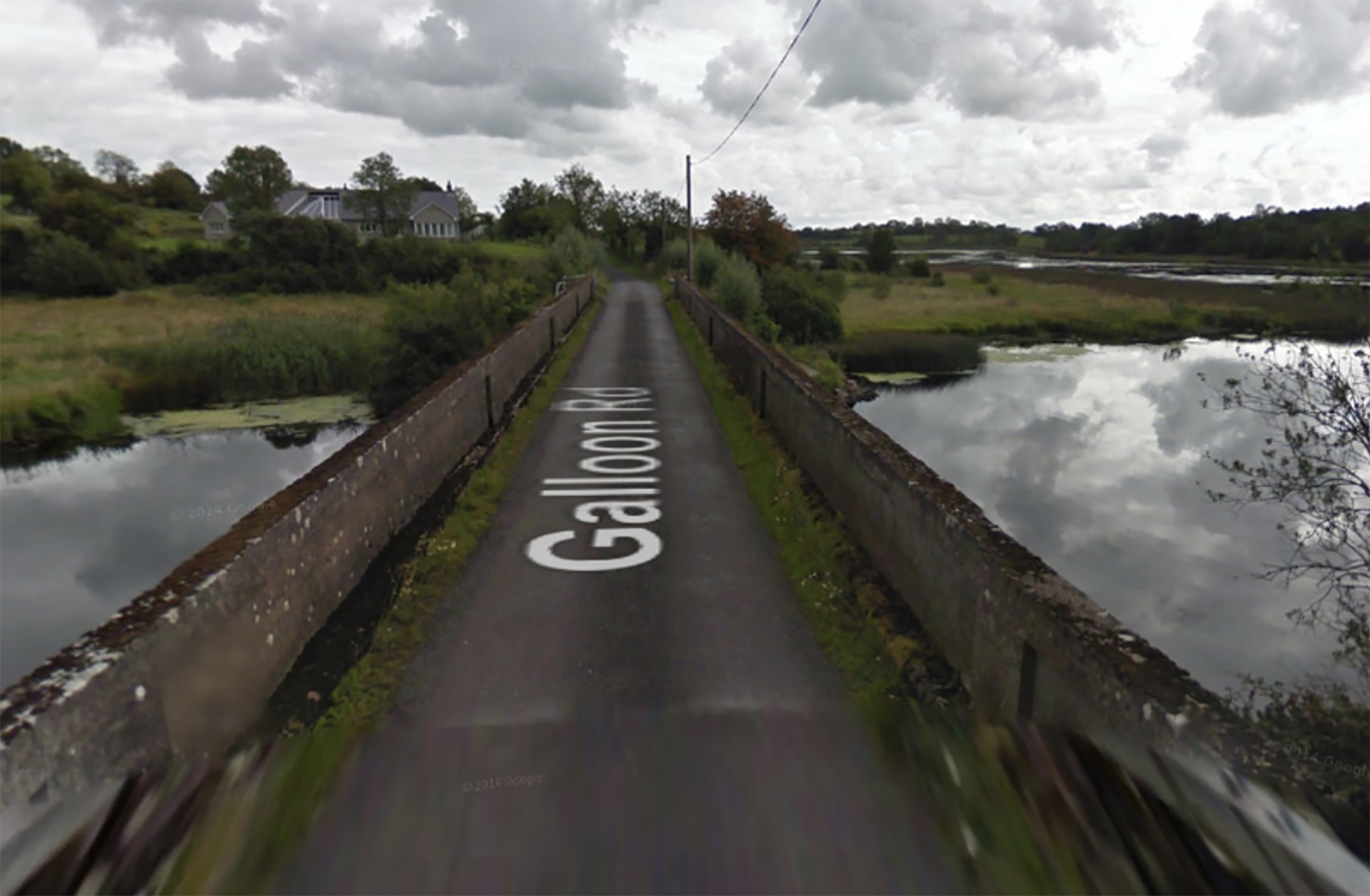


A well-known Fermanagh bridge has been given listed building status.
It means Galloon Bridge in Newtownbutler is now protected by special planning laws which aim to preserve historic buildings and monuments.
Set in the lakelands of Upper Lough Erne, the bridge at Galloon dates was opened in 1931 and is a good example of early 20th century engineering.
In 1927, Fermanagh County Council sanctioned the construction of this link bridge to Galloon Island.
It had been demanded by the islanders due to the imposition of the border which curtailed access to Belturbet, the commercial centre for this locality, and the need for improved access to Newtownbutler, on the Northern Ireland side.
The council persuaded the government to fund its £4,000 estimated cost; the County Council would fund the access roads.
In 1928, a tender for £5895.19s.0d was accepted by the council from Mr Faris, a Belfast contractor. James McManus successfully tendered £935 for the roads in 1930. Work began in early 1929 but was not completed until 1931 owing to delays occasioned by flooding.
The bridge can be seen from several vantage points on the shore of the lough.
Socially and historically, it played an important role in linking Galloon Island with nearby towns on both sides of the border, strengthening local connections and communities.
Newly listed status has also been placed on a small group of buildings at 82 Marlbank Road near Florencecourt.
The buildings are in the Cuilcagh area, close to Co Cavan border within the Cuilcagh Lakelands geopark.
Architecturally, the range exemplifies traditional rural building practices, with a single-storey, three-bay, direct-entry former thatched dwelling house and shop constructed in local limestone.
There are outbuildings to both north and south forming an L-shaped arrangement onto the yard, with the southern outbuilding being constructed in mass concrete with exposed large aggregate and shuttering lines, adding interest as evidence of resourceful construction methods using materials at hand.
The principal dwelling was known locally as ‘Sheerin’s Shop’, acting as a local social gathering place hosting boxing and dancing for the locals.