


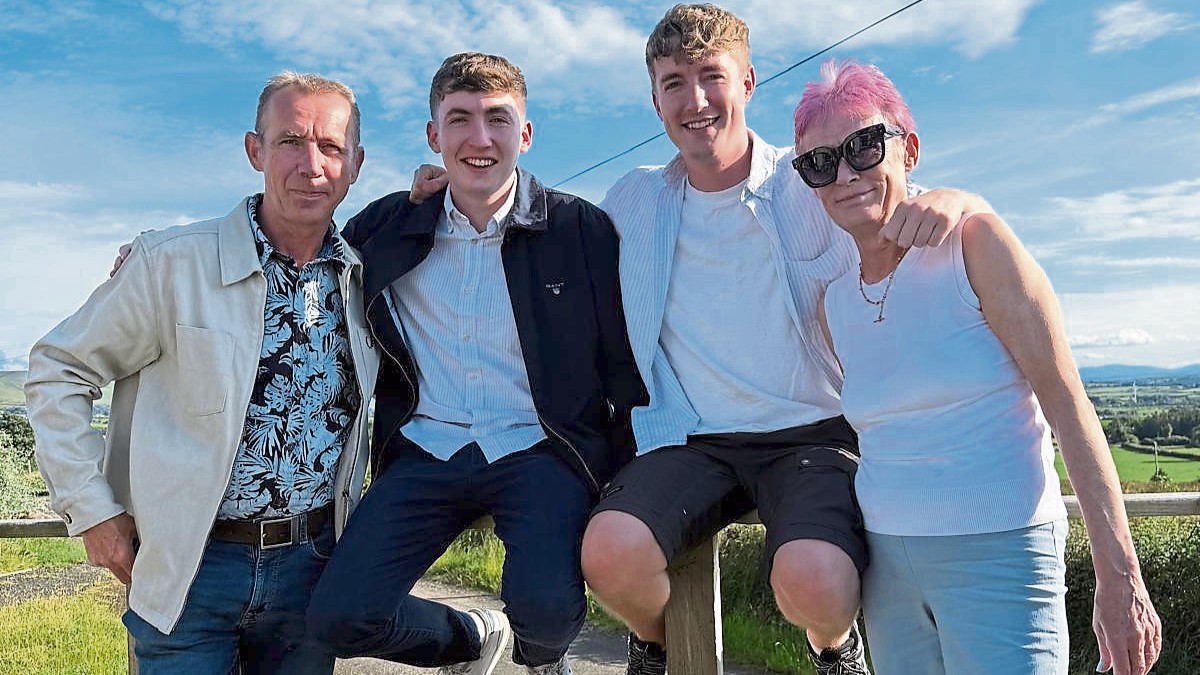


A LOCAL couple from Lisnarick have been celebrating three decades transforming the lives of people with spinal cord injuries and other disabilities in Asia.
Stephen and Maggie Muldoon have spent 30 years volunteering at the Centre for the Rehabilitation of the Paralysed (CRP) in Savar, near Dhaka, Bangladesh.
Founded in 1979 by British physiotherapist Valerie Taylor, the CRP provides essential rehabilitation services.
Stephen, who qualified as a registered general nurse in 1990, first worked in Colchester with the disability charity John Grooms.
In December 1995, John Grooms partnered with CRP, and Stephen was seconded as a nurse educator.
“What was supposed to be a two-year placement turned into six years,” Stephen recalled.
“During that time, I became rehabilitation co-ordinator, while Maggie volunteered as a fundraiser, raising over £4 million to support the centre’s work.”
Positive difference
Stephen remembers his first day at CRP as daunting.
“I returned home and told Maggie that the best course of action might be to go back to Ireland because I didn’t know where to start,” he said.
Maggie’s response, ‘could you make things worse?’, helped him realise he could, in fact, make a positive difference.
When the Muldoons arrived, CRP cared for around 100 patients with acute spinal cord injuries.
“Many injuries were caused by falling from trees while collecting fruit, road traffic accidents, or carrying heavy loads on the head,” Stephen explained.
“Patients often faced complications such as pressure sores and bowel or bladder incontinence.
“With only seven nurses on staff and extremely limited resources, family members frequently had to assist with care.”
Thirty years later, CRP treats over 100,000 patients each year, including those recovering from spinal injuries, strokes, and children with disabilities.
Local support
Reflecting on their time in Asia, Stephen notes it has been anything but smooth sailing.
“We witnessed major disasters, including Bangladesh’s 1998 floods, the 2004 Sri Lanka tsunami, and the 2015 Nepal earthquake.
“Throughout these events, support from local communities, as well as organisations like the Fermanagh Trust and the Fisher Foundation, proved invaluable.”
Attitudes toward disability in Bangladesh have also evolved over the years.
“Thirty years ago, disability carried a heavy stigma and was sometimes seen as punishment from a higher power. Children were often abandoned at CRP’s gates.
“Today, more people with disabilities attend school, work, and participate in their communities, which has helped shift perceptions,” Maggie said.
The Muldoons are especially proud of the success stories they have witnessed. Stephen recalled one in particular,
“Lovely, a young girl from Bangladesh, became a renowned mouth painter despite being paralysed from the neck down, supporting her family with her artwork,” he said.
“Stories like hers show why rehabilitation is so crucial, especially in countries without social security systems.”
Branching out
Their work has extended beyond Bangladesh. In 2002, they helped establish the Spinal Injury Rehabilitation Centre (SIRC) in Kathmandu, Nepal, now the country’s leading rehabilitation facility.
Both are founding members of the Asian Spinal Cord Network (ASCoN), which connects spinal injury centres across Asia to share knowledge and improve care.
In partnership with the International Spinal Cord Society they were instrumental in the development of www.elearnsci.org, a free online resource for medical professionals and people living with spinal cord injuries.
Marking 30 years in the field is a profound milestone.
“What began as a two-year placement has become a lifelong commitment,” Maggie reflected.
“We feel privileged to see the organisations we’ve worked with continue to grow, operate independently, and provide vital services for those who need them most.”
Their work has spanned Bangladesh, Nepal, Sri Lanka, Myanmar, India, and Ukraine. Even after returning to Ireland in 2006, they continued supporting rehabilitation projects across Asia through virtual engagement and in-person visits.
Three decades on, Stephen and Maggie Muldoon remain committed to their mission, driven by the profound impact rehabilitation has on people’s lives.