


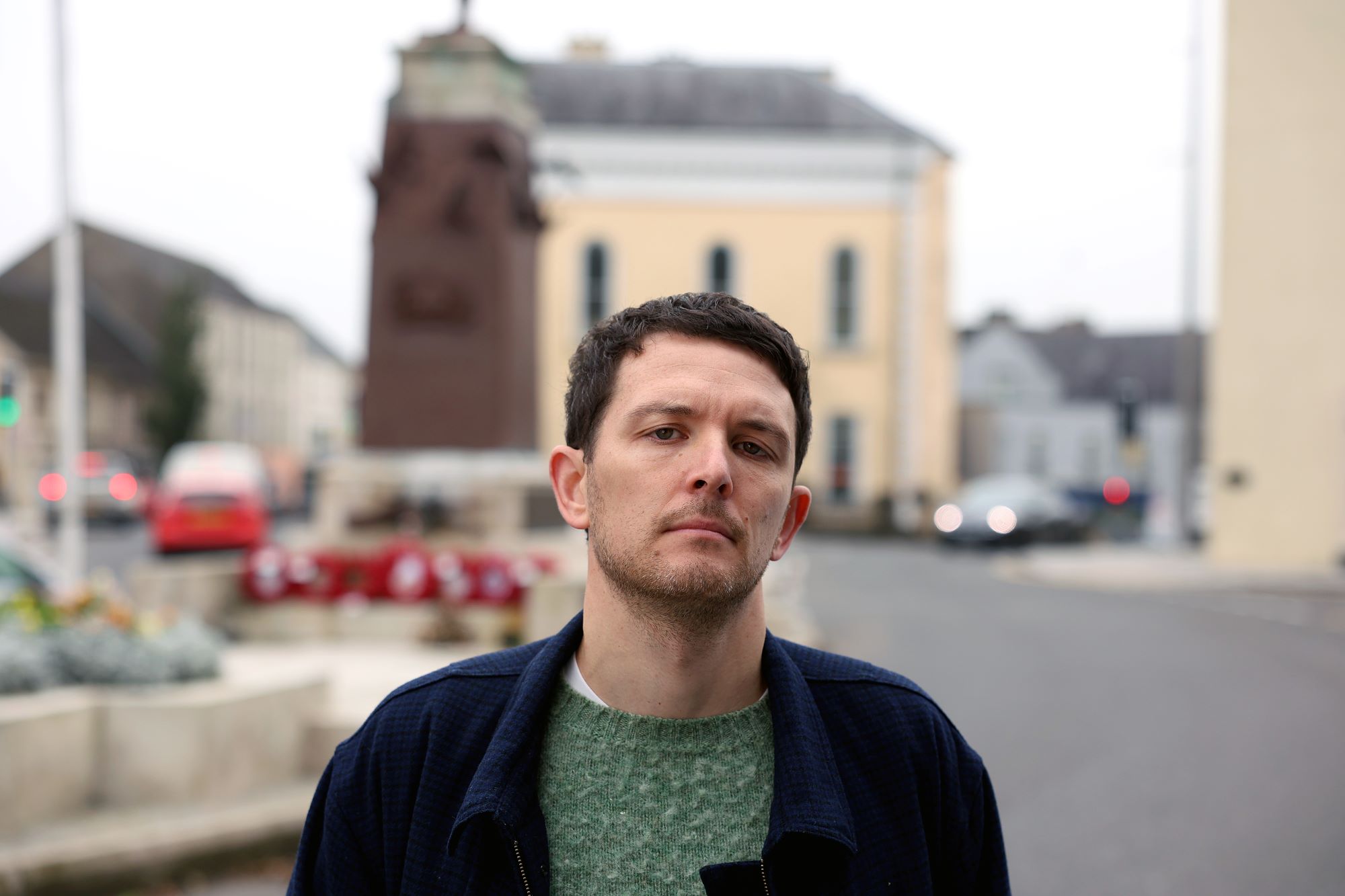


A new podcast from Enniskillen-born journalist Mario Ledwith is shining fresh light on one of the town’s darkest days.
Mario, who was born in the Erne Hospital just two days after the Poppy Day bombing on November 8, 1987, has always felt a deep, personal connection to the tragedy that claimed 12 lives and injured 68 others.
Now, as host of ‘The Poppy Day Bomb | Times Investigates’, he explores the devastating impact of the attack – and the questions that remain nearly four decades on.
“I came into the Erne Hospital against that backdrop of violence and trauma, so although I wasn’t directly affected myself, it has always been something I have thought back to. It has been a grim marker for me, and I think that caused a bit of intrigue, it’s always been a source of curiosity for me,” Mario told the ‘Herald.
“I have always had an interest in what happened in Enniskillen that weekend because of my personal connection to it.
“I’ve had thoughts running through me as to what drives you to place a bomb in the middle of a town centre. How have they lived with it in the years after, as well as all those affected?”
The former St Michael’s pupil said his decision to investigate the bombing came from seeing how many families have been left without answers over the years.
“As I’ve read more about legacy and the repeated attempts by government after government to devise a way for families to get answers – all totally unsuccessfully – I’ve seen how frustrated people have become. That motivated me to go and ask my own questions,” the Times news reporter said.
“The Enniskillen bomb was an act of violence that stood out from the daily cycle of the Troubles, and I wanted to try to understand it.”
Mario said exploring the story wasn’t easy, not just because of his personal connection, but because the subject still feels difficult for many to confront.
“It was very close to home for me. It’s still a sensitive topic. Sometimes addressing what happened during the Troubles can feel quite taboo; it makes people very uncomfortable and awkward. At times it felt like there was still a veil of silence around what happened in Enniskillen that Sunday,” he said.
“I don’t just mean from the republican movement… I also mean among the security community, the police, and security services on both sides of the border. Enniskillen is something that makes people very uncomfortable and not a lot of people like to address it. That has been a failing for all those affected.”
Mario’s investigation includes efforts to identify and contact several individuals suspected of involvement in the bombing, as well as an examination of missed opportunities in the original police inquiries.
“Families were told by Margaret Thatcher that no stone would be left unturned, but that wasn’t always the case,” he said.
“There is also some interesting detail about the initial investigation into Enniskillen, which, according to some police sources, wasn’t very good. It seems like that may have set the tone, and some of those failures appear to have been apparent from day one.”
Mario who is the son of Gerry Ledwith, who famously ran the well-known Golden Arrow chip shop, added that while there is a strong desire to move forward, true progress can’t happen without open and honest conversations about the past.
“Sometimes people say we shouldn’t talk about these things, that it’s best just to move on – that Northern Irish society is moving forward so let’s not reopen the dark days of the past,” he said.
“I completely agree with the desire to move on, but unless people from all communities can fully talk about what happened, it’s very difficult to plot the route forward.
“There needs to be openness and truth – whatever version of truth that is – so we can try to move forward.”
The Poppy Day Bomb is produced by The Times and The Sunday Times podcast production team, and is available to listen to on all major podcast platforms.