


LOCALS living with dementia in Fermanagh are in the midst of “a diabolical situation” due to a lack of funding and support for the condition.
With an increasing number of people being diagnosed with dementia in the county, one local man has bravely shared his story to raise awareness of how little support is available in the area and the impact this has on patients and their families.
Stephen Kennedy from Derrygonnelly was diagnosed with dementia in 2016, when he was just 56-years-old.
A steering group member of 3 Nations Dementia Working Group, and a member of the Alzheimer’s Society Dementia Pioneers, Stephen feels Fermanagh dementia patients are being left behind.
“The UK Government launched their funding spend for the next four years and dementia health services weren’t mentioned at all. I’ve challenged [Minister] Mike Nesbitt on it,” Stephen told the ‘Herald.
“The straight answer back was we don’t have the funding coming into the country. If the money isn’t being allocated to Northern Ireland, how are we going to get it and where do we get it from?”
While there is a Dementia Companion Service at the South West Acute Hospital, there is a worrying lack of support for local services here, with many forced to travel elsewhere.
Stephen also feels there isn’t enough support for younger people like himself, who are diagnosed with an early on-set of the condition.
“People going to the [Alzheimer’s Society] meetings are generally of an older age,” he said. “For young people with dementia in their mid 50s, it’s not for everybody.
“You can see what it’s going to develop into and it’s not good for people either.
“I go to a ‘Memory Lane’ group in Omagh every other Wednesday. It’s fantastic but that is only a few friends who have got together and sorted it out themselves, supported by Libraries NI.
“They are doing a fantastic job there, but we have nothing like that in Enniskillen.”
‘Left behind’
Dementia campaigners have been lobbying for more financial support, but to no avail.
It was recently reported that two new dementia drugs, Lecanemab and Donanemab, which have been approved for use in the UK, won’t be available on the NHS due to their cost.
While he recognises the new drugs won’t provide a cure for people living with dementia and they carry side effects, Stephen feels the fight against dementia isn’t being supported.
“Money is being thrown at cancer left, right and centre,” the Derrygonnelly man explained.
“Nobody picks their own illness, whatever hand you’re dealt with, you’ve got to live with and it’s not fair for people living with dementia to be left behind.
“It’s a diabolical situation to be in.”
According to the Alzheimer’s Society, around 22,000 people are living with dementia in the North.
The number is projected to rise significantly, potentially reaching nearly 43,000 people by 2040.
Receiving a diagnosis
Reflecting on receiving his own diagnosis, Stephen feels more help is needed to support people who are told that they have dementia, with no cure for the condition.
“Your life is just pulled from under you. The first words that come out of the consultant’s mouth is you have got to get this man’s affairs in order. That’s such a frightening term to hear,” he said.
“The full diagnosis clinics used to be run on a Friday and it would leave you over the weekend looking on Google, because you don’t get information when you go for your diagnosis.
“We have long pushed for people with dementia to be attending these clinics that if people want to talk to them, you can explain how it’s not the end of life.
“We have asked if we could provide leaflets, but nobody is interested. When you’re diagnosed, it does hit you very hard and it will take you 12 months because you go to a very, very dark place.”
Through his active role with the 3 Nations Dementia Working Group and the Alzheimer’s Society Dementia Pioneers, Stephen’s keen to remove the stigma surrounding a dementia diagnosis.
“I’ve been trying to destroy the image of someone in a wheelchair and staring into space, with no clue of what’s going on around them, which is everybody’s perspective of dementia,” he said.
“It doesn’t have to be the killer that everybody makes out. With family support around you, you can live a perfectly normal life. Dementia doesn’t have to be the be all and end all of it.
“If you can change the pathway for anyone at all, you’re making life better for somebody. For people on the track behind you, if you can make it easier for them, why would you not do it?”
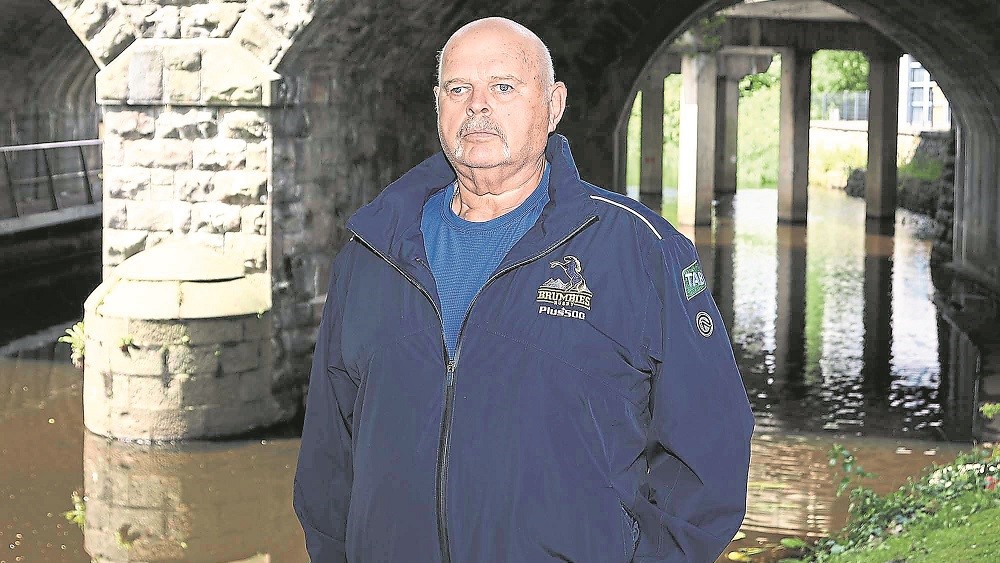
Early on set Dementia sufferer, Steven Kennedy
Funding gaps put Fermanagh dementia patients at risk
Posted: 9:12 am July 22, 2025