


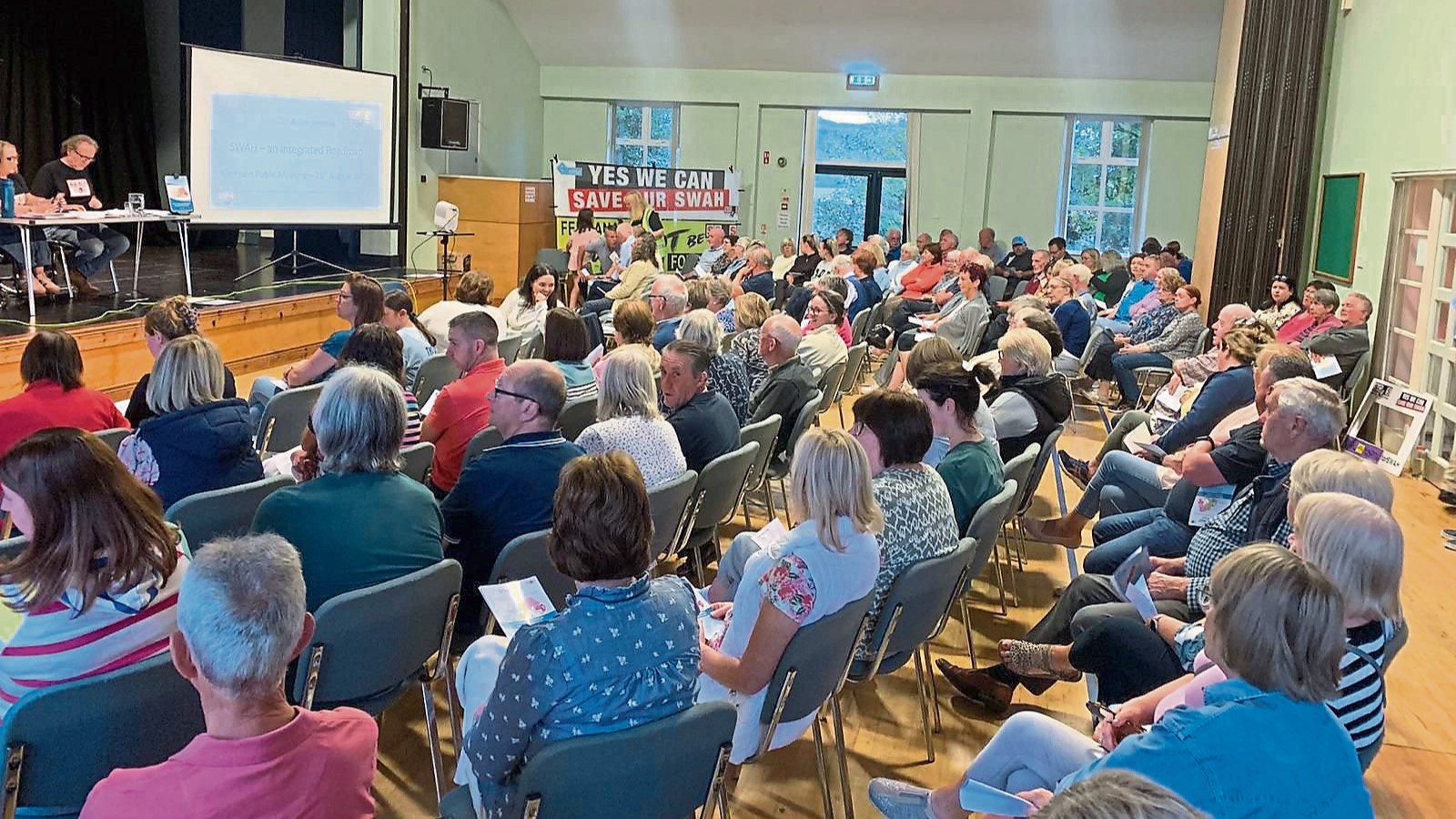


THE Save Our Acute Services (SOAS) campaign group is continuing its efforts to connect with communities across the region, with more public meetings planned for October as part of its ongoing fight to protect and restore emergency general surgery (EGS) at the SWAH.
With community concern still high and the future of the service uncertain, the upcoming meetings will update residents, rally support, and outline the next steps—campaigners are urging strong public turnout, stressing that unity and pressure are more vital than ever.
At the meetings, information is both shared by SOAS and brought to the group, with patients, staff members, and concerned community members all contributing.
“The reality that this could become our permanent situation and the disadvantages that gives our survival is something that everyone realises,” a SOAS spokesperson said.
“It’s not enough to pay lip service to a consultation. It’s a moral requirement to be able to save lives and a hospital that is over capacity and many hours too far away cannot do that for the population of the South West region.
“Each meeting gives people the confidence to speak up in front of their friends and neighbours and as such we do not record live footage.”
In the coming weeks, SOAS has several meetings arranged to connect with the community.
On October 7, they will meet at Moybrone Hall in Letterbreen, followed by a meeting on October 9 at Saint Aidan’s in Derrylin.
On October 14, a meeting will take place at St Mary’s Community Centre in Derrygonnelly. They also have a meeting planned with the local Women’s Institute.
Meanwhile, the University of the Third Age (U3A) has written a letter voicing serious concern over the continued erosion of EGS services in Fermanagh.
In their statement, U3A members express strong support for the SOAS Roadmap, calling for urgent action to protect vital frontline care for rural communities.
“This is not just a health policy issue — it is about safeguarding the lives, dignity, and wellbeing of older people across rural communities,” the statement read.
“Many of us are in the later stages of life, living with complex health needs, and more likely to experience events such as falls, fractures, and other medical emergencies that require immediate surgical attention.
“The term ‘silver trauma’ is increasingly used in emergency medicine to describe such injuries in older adults, and it is a growing concern. Older people are more vulnerable to medical complications, slower recovery, and poorer outcomes when access to timely emergency care is delayed.”
The letter – which comes on the back of other similar appeals by local businesses, sports clubs and churches – highlights that every additional mile to a hospital and every extra minute waiting for surgery increases the risk for older people.